



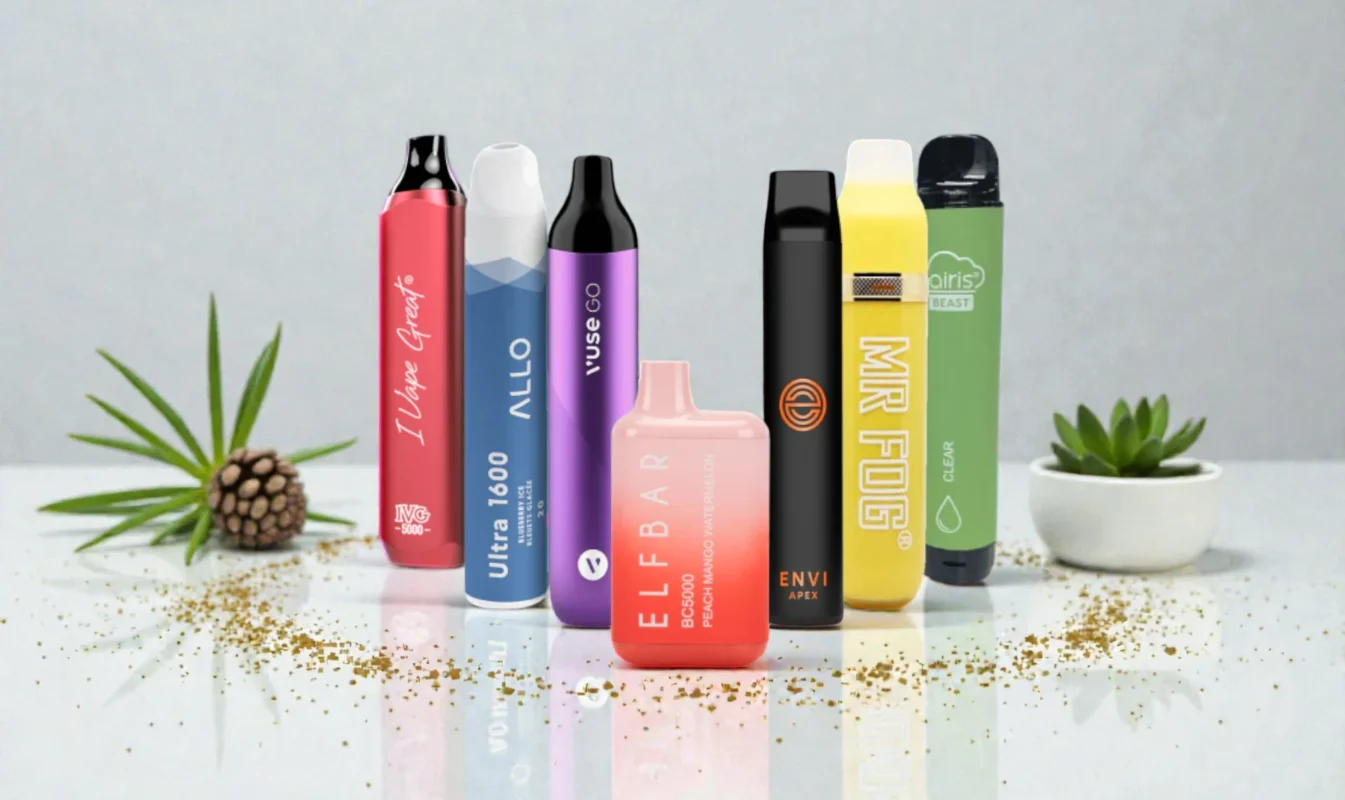
Disposable vapes are electronic vaping devices designed for use over a limited period before the entire device is discarded. Unlike traditional reusable vape kits, which generally allow users to recharge the battery, refill a tank, or replace certain components, disposable vapes typically come ready to use with e-liquid already inside.
These devices have become widely recognised because of their compact design, simple operation, and availability in different flavours and styles. Depending on the model, a disposable vape may feature a built-in battery, an internal heating element, a prefilled liquid reservoir, and an automatic or button-operated activation system.
Understanding what disposable vapes are, how they work, what components they contain, and how they should be handled is important before learning more about this category of electronic nicotine products.
What Is a Disposable Vape?
A disposable vape is a single-use or limited-use electronic vaping device that heats a liquid to create an aerosol that the user inhales. The liquid is commonly called e-liquid or vape juice and may contain nicotine, flavourings, propylene glycol, vegetable glycerin, and other ingredients.
Unlike a reusable vaping device, a conventional disposable model is not designed for the user to refill its liquid reservoir or replace its internal battery. Once the device reaches the end of its intended service life, it should be disposed of through an appropriate waste or recycling route.
Disposable vapes are available in different sizes, shapes, nicotine strengths, and flavour profiles. Some models are small and lightweight, while others feature larger batteries, digital displays, adjustable airflow, or rechargeable batteries.
It is important to understand that a disposable vape is not necessarily harmless because it is compact or easy to operate. Many contain nicotine, which is addictive, and vaping aerosol can expose users to substances that may harm their health.
How Do Disposable Vapes Work?
Disposable vapes operate using a battery-powered heating system. When the device is activated, electricity heats a coil or another heating element that warms the e-liquid. This process produces an aerosol that travels through the mouthpiece.
1. Built-In Battery
The battery provides the electrical energy needed to operate the heating element. Most disposable devices have an integrated battery that is intended to remain inside the device throughout its service life.
Some models have rechargeable batteries, while others are not rechargeable. A charging port does not automatically mean that the device can be safely refilled or that every component is reusable.
2. E-Liquid Reservoir
The reservoir stores the liquid used to produce the aerosol. Its capacity varies according to the model and the regulations applicable in the country where it is sold.
The liquid may contain nicotine or may be marketed as nicotine-free. However, product labels should be checked carefully because ingredients and nicotine strengths differ between products and markets.
3. Heating Element
The heating element warms the liquid so that it forms an aerosol. The design of the heating system can affect how the device performs, but it does not eliminate the potential health risks associated with vaping.
4. Mouthpiece
The mouthpiece is the part through which the aerosol is inhaled. It is usually integrated into the device body, making the disposable format relatively compact.
5. Activation Mechanism
Many disposable vapes use draw activation, meaning the device activates when the user inhales through the mouthpiece. Other models may include a button or additional controls.
The exact operation depends on the model. Users should follow the manufacturer’s safety instructions rather than attempting to modify the device.
Main Types of Disposable Vapes
Disposable vaping devices come in several formats. Understanding their differences can help explain how the category has evolved.
Standard Disposable Vapes
Standard disposable vapes are designed around a prefilled liquid reservoir and a built-in battery. Many are intended to be used until the liquid runs out or the battery reaches the end of its service life.
Their main defining feature is the limited-use design rather than a particular flavour, size, or battery capacity.
Rechargeable Disposable Vapes
Some disposable devices include a rechargeable battery. Charging allows the device to continue operating while usable liquid remains, but it does not necessarily make the device refillable.
Rechargeable disposable devices still require appropriate end-of-life disposal. Users should never charge a damaged device or use an unsuitable charger.
High-Capacity Disposable Vapes
Some models advertise higher liquid capacities or larger numbers of puffs. These claims are estimates based on particular testing or usage conditions and should not be treated as guaranteed results.
Actual usage can vary with inhalation duration, device settings, battery performance, and other factors. A higher advertised puff count does not necessarily mean better quality or improved safety.
Disposable-Style Pod Devices
Certain products resemble disposable vapes but use replaceable or refillable pods. These should be distinguished from conventional disposable devices because their maintenance and waste requirements can be different.
Always check the product description to establish whether the entire device is disposable or whether specific components are designed for reuse.
Common Features of Disposable Vapes
Disposable vapes may include several features depending on their design.
Compact Construction
Many devices are designed to be lightweight and portable. Their integrated components reduce the need for separate tanks, bottles, and replacement coils.
Different Flavour Options
Products may be offered in tobacco, mint, menthol, fruit, or dessert-inspired flavour profiles. The exact selection varies by manufacturer and market.
Flavour names describe a product’s intended taste or aroma; they do not mean the liquid contains the actual fruit, dessert, or other ingredient depicted by its name.
Nicotine Strength Variations
Disposable vapes may contain different nicotine concentrations, depending on the product and local regulations. Some products are labelled nicotine-free, but labels should not be assumed accurate without reliable product information.
Nicotine can cause dependence, and higher concentrations may increase the risk of unpleasant effects such as nausea, dizziness, headache, or a racing heartbeat.
Simple Operation
Many disposable models are designed to operate without complicated setup. They generally do not require the user to fill a tank or install a separate coil.
Simple operation, however, does not remove the need to understand the health risks, charging instructions, and disposal requirements.
Digital Displays and Additional Controls
Some newer models include battery indicators, liquid indicators, screens, or airflow controls. These features vary widely and are not present in every disposable device.
A display or advanced feature does not by itself demonstrate that a product is authentic, reliable, or safe.
Disposable Vapes vs Reusable Vape Devices
Disposable and reusable vape devices differ mainly in their construction, maintenance, and end-of-life requirements.
| Feature | Disposable Vape | Reusable Vape |
|---|---|---|
| Main design | Limited-use device | Designed for continued use |
| Liquid supply | Usually prefilled | Refillable or uses replaceable pods |
| Battery | Integrated | Usually rechargeable |
| Maintenance | Generally limited | May require cleaning and component replacement |
| Replacement parts | Often not user-replaceable | May include replaceable pods, coils, or tanks |
| Waste | Entire device or more components discarded | Some components can be reused |
| Initial setup | Often minimal | May require more setup |
| Long-term costs | Repeated purchases may add up | Depends on device and replacement supplies |
Neither category is risk-free. Reusable devices may reduce some forms of waste, but their overall environmental impact depends on how they are manufactured, maintained, and disposed of.
Are Disposable Vapes Safe?
Disposable vapes are not risk-free. Many contain nicotine, an addictive substance that can affect the brain and nervous system. Vaping aerosol can also contain fine particles, flavouring chemicals, metals, and other substances that may pose health risks.
The long-term health effects of vaping are still being studied. The absence of smoke from burning tobacco does not mean that inhaling a vaping aerosol is harmless.
People who do not smoke or use nicotine should not start vaping. Young people, pregnant individuals, and people who do not already use tobacco products should avoid nicotine vaping. Anyone experiencing symptoms such as chest pain, difficulty breathing, or severe dizziness after vaping should seek appropriate medical attention.
People who smoke and are considering alternatives should speak with a qualified healthcare professional about evidence-based ways to stop smoking. Using both cigarettes and vaping products may preserve exposure to harmful substances rather than eliminate the risks associated with smoking.
How Long Does a Disposable Vape Last?
The lifespan of a disposable vape depends on its battery, liquid capacity, design, and usage patterns.
A device advertised with a particular puff count may not deliver that exact number in everyday use. Longer inhalations typically use more liquid per puff, while battery performance can change over time.
A disposable device may reach the end of its service life when the liquid is depleted, the battery no longer operates as intended, or the manufacturer identifies another end-of-life condition.
Do not attempt to open, refill, heat, puncture, or repair a disposable vape. These actions can expose users to liquid or damage the battery.
How Should Disposable Vapes Be Disposed Of?
Disposable vapes contain electronic components and often lithium-ion batteries. They should not automatically be treated as ordinary household rubbish because damaged or compressed batteries can create fire risks, and electronic waste can contain materials that require specialised handling.
Where available, take used devices to an authorised electronic-waste collection point or battery recycling facility that accepts vaping devices. Follow local waste-management rules and the manufacturer’s disposal instructions.
Never burn a disposable vape, puncture its battery, or dismantle the device to recover its components. If a device becomes unusually hot, swollen, leaking, or damaged, stop using it and follow local guidance for safely handling damaged batteries.
How to Identify a Genuine Disposable Vape
Counterfeit or poorly manufactured vaping products may contain inaccurate labels, inconsistent ingredients, or batteries that do not meet appropriate safety standards.
Before purchasing a product, consider these checks:
- Examine the packaging for clear product identification and readable labelling.
- Check the stated nicotine concentration and ingredients where provided.
- Look for manufacturer information and a verifiable authenticity system, if available.
- Inspect the device for leaks, cracks, unusual odours, or other visible damage.
- Avoid products with unclear origins or suspiciously inconsistent packaging.
- Confirm that the product complies with the laws and regulations in your location.
Packaging alone cannot guarantee authenticity. If a product appears damaged or its origin cannot be verified, do not use it.
Frequently Asked Questions
What is a disposable vape used for?
A disposable vape is an electronic device that heats e-liquid to produce an inhalable aerosol. Many contain nicotine, and they are not risk-free.
Do all disposable vapes contain nicotine?
No. Some are labelled nicotine-free, while others contain nicotine at different concentrations. Product labels and ingredients should be checked carefully.
Can disposable vapes be recharged?
Some models have rechargeable batteries, while others are designed to be used without recharging. Follow the manufacturer’s instructions, and never charge a device that is not designed for it or that shows signs of damage.
Can a disposable vape be refilled?
Conventional disposable vapes are not designed for refilling. Opening or modifying one can cause leaks, exposure to e-liquid, or battery damage.
What does the puff count mean?
The puff count is an estimate of how many inhalations a device may provide under particular conditions. Actual results vary depending on inhalation length, device design, and other factors.
Are disposable vapes better than cigarettes?
They are different products, but vaping is not harmless. Adults who smoke should seek qualified advice about proven smoking-cessation options rather than assuming that any vaping product is safe.
Can disposable vapes be recycled?
Some electronic-waste and battery collection programmes accept disposable vapes. Acceptance varies by location, so check local recycling guidance instead of placing the device in ordinary recycling bins without confirmation.
Conclusion
Disposable vapes are limited-use electronic devices that combine a battery, heating element, liquid reservoir, and mouthpiece in a compact design. Their operation is generally straightforward, and models vary in battery type, flavour options, nicotine content, and additional features.
However, convenience should not be confused with safety. Many disposable vapes contain addictive nicotine, and inhaling vaping aerosol carries health risks. Battery safety, product authenticity, local regulations, and responsible electronic-waste disposal are also important considerations